Introduction
Technology plays a critical role in almost every business today. Companies rely on software, cloud services, cybersecurity, data analytics, and digital tools to stay competitive. However, managing technology investments effectively can be challenging. This is where technology business management (TBM) becomes important.
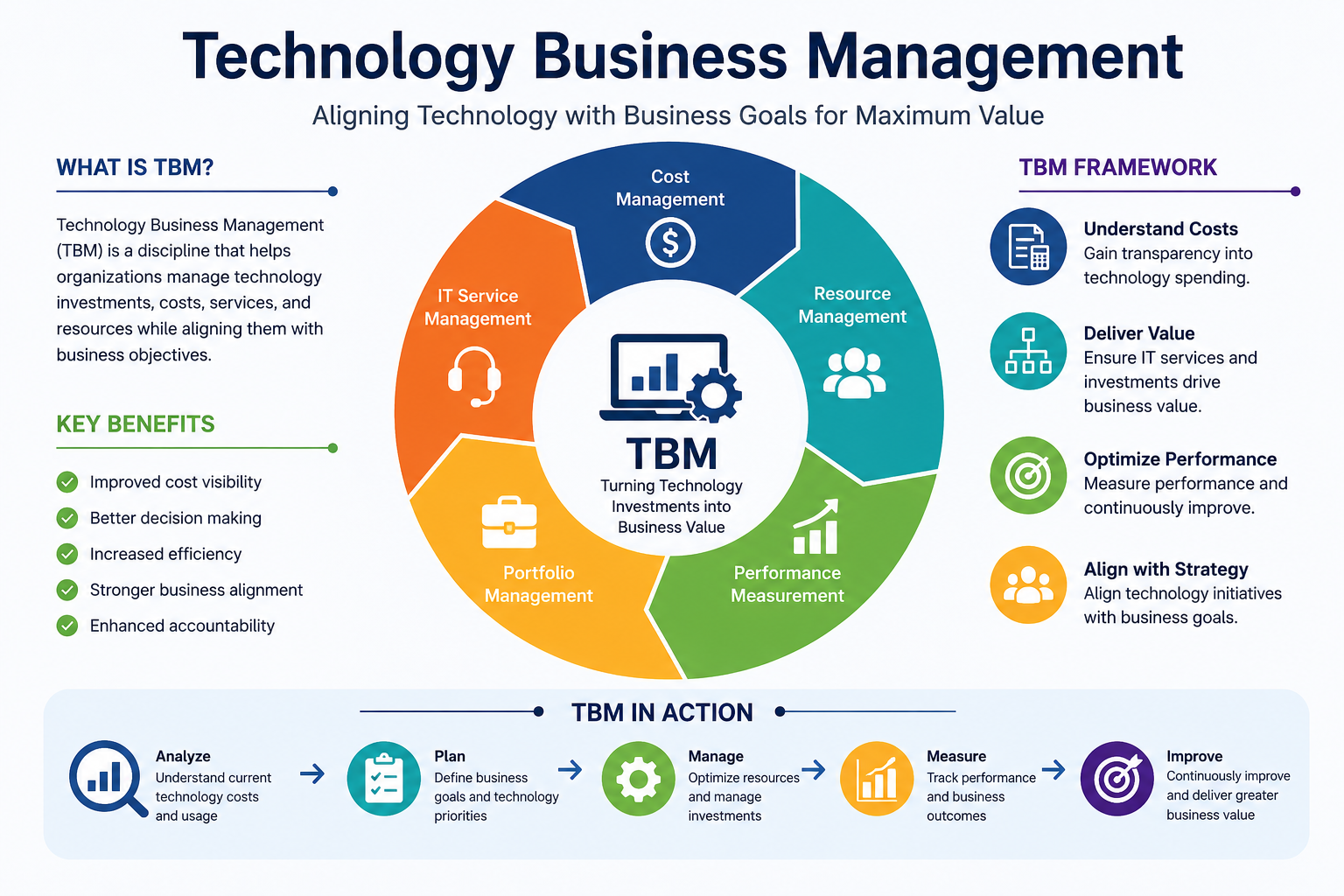
Technology business management is a framework that helps organizations manage technology spending, improve decision-making, and align IT investments with business goals. Instead of viewing technology as just a cost center, TBM helps companies treat technology as a strategic business asset.
In this guide, we will explore what technology business management is, how it works, its benefits, key components, implementation steps, challenges, and best practices.
What Is Technology Business Management?
Technology business management is a discipline that connects technology investments with business value. It provides a structured approach for managing IT costs, resources, services, and performance.
The primary goal of TBM is to help organizations understand:
- Where technology money is being spent
- Which services create business value
- How technology supports company objectives
- Ways to optimize costs and improve efficiency
Technology business management enables leaders to make informed decisions using accurate financial and operational data.
Why Technology Business Management Matters
As businesses increase their use of digital technologies, technology spending continues to grow. Without proper management, organizations may face:
- Uncontrolled IT expenses
- Duplicate software subscriptions
- Poor resource allocation
- Limited visibility into technology costs
- Difficulty measuring business value
Technology business management helps solve these problems by providing transparency and accountability.
Key Reasons TBM Is Important
- Improves financial visibility
- Supports strategic planning
- Enhances cost management
- Increases operational efficiency
- Aligns IT with business goals
- Enables data-driven decisions
Evolution of Technology Business Management
Technology management has evolved significantly over the years.
| Era | Focus |
|---|---|
| Traditional IT Management | Infrastructure and maintenance |
| IT Service Management (ITSM) | Service delivery and support |
| Cloud Management | Cloud optimization and governance |
| Technology Business Management | Business value and financial transparency |
Modern organizations now focus on how technology contributes to overall business growth rather than simply maintaining systems.
Core Principles of Technology Business Management
Technology business management is built on several key principles.
1. Financial Transparency
Organizations gain a clear view of technology spending across departments, services, and projects.
Benefits
- Better budgeting
- Improved forecasting
- Cost accountability
2. Business Alignment
Technology investments should directly support organizational goals.
Examples include:
- Improving customer experience
- Increasing productivity
- Supporting innovation
- Driving revenue growth
3. Value-Based Decision Making
TBM encourages leaders to evaluate technology investments based on business outcomes rather than technical requirements alone.
Questions include:
- What value does this investment provide?
- Does it improve efficiency?
- Will it increase revenue?
4. Continuous Optimization
Organizations continuously evaluate technology resources to identify:
- Cost-saving opportunities
- Underused assets
- Performance improvements
Key Components of Technology Business Management
Several elements work together within a TBM framework.
Technology Cost Management
This involves tracking and managing:
- Hardware costs
- Software licenses
- Cloud services
- Infrastructure expenses
- Vendor contracts
The goal is to ensure every dollar spent delivers value.
IT Service Management
Organizations must understand the cost and value of services such as:
- Email systems
- Network services
- Cybersecurity
- Customer support platforms
This helps determine which services require improvement or optimization.
Resource Management
Resource management focuses on:
- Employees
- Contractors
- Infrastructure
- Applications
Efficient resource allocation improves productivity and reduces waste.
Portfolio Management
Technology portfolios include:
- Projects
- Applications
- Investments
- Technology assets
Portfolio management helps prioritize initiatives that align with business objectives.
Performance Measurement
Organizations use key performance indicators (KPIs) to monitor success.
Common metrics include:
- IT spending efficiency
- Service availability
- Project success rates
- Customer satisfaction
- Return on investment (ROI)
Technology Business Management Framework
A typical TBM framework consists of multiple layers.
| Layer | Purpose |
|---|---|
| Cost Layer | Tracks technology expenses |
| Resource Layer | Monitors people and assets |
| Service Layer | Measures IT service delivery |
| Application Layer | Evaluates software performance |
| Business Layer | Connects technology to business outcomes |
This structure allows leaders to see how technology investments impact organizational goals.
Benefits of Technology Business Management
Implementing TBM can provide significant advantages.
Improved Cost Visibility
Organizations gain a detailed understanding of where technology funds are allocated.
Benefits include:
- Reduced waste
- Better budgeting
- Improved financial planning
Better Decision Making
Accurate data allows executives to make informed decisions about:
- New technology investments
- Vendor selection
- Resource allocation
Increased Efficiency
Technology business management identifies inefficiencies and opportunities for improvement.
Examples include:
- Eliminating redundant tools
- Optimizing cloud usage
- Streamlining workflows
Stronger Business Alignment
TBM ensures technology initiatives support strategic business goals.
This leads to:
- Greater stakeholder confidence
- Improved collaboration
- Better organizational performance
Enhanced Accountability
Departments become more accountable for technology spending and resource usage.
This promotes responsible decision-making across the organization.
How to Implement Technology Business Management
Organizations can follow a structured approach to implement TBM successfully.
Step 1: Assess Current Technology Spending
Begin by analyzing:
- Existing budgets
- Software subscriptions
- Infrastructure costs
- Vendor contracts
Identify areas where spending lacks visibility.
Step 2: Define Business Objectives
Determine how technology should support company goals.
Examples:
- Improve customer satisfaction
- Increase operational efficiency
- Reduce costs
- Accelerate innovation
Step 3: Establish Cost Transparency
Create systems that track technology expenses accurately.
Useful methods include:
- Cost allocation models
- Financial reporting dashboards
- Automated expense tracking
Step 4: Map Technology Services
Document all technology services and their associated costs.
This provides a clearer understanding of:
- Service value
- Service demand
- Resource requirements
Step 5: Implement Performance Metrics
Track KPIs such as:
- Service uptime
- Cost per user
- Project ROI
- Resource utilization
Regular monitoring supports continuous improvement.
Step 6: Optimize and Improve
Review technology investments regularly and identify opportunities to:
- Reduce costs
- Improve performance
- Increase business value
Common Challenges in Technology Business Management
Although TBM offers many benefits, organizations may face challenges.
Data Quality Issues
Incomplete or inaccurate data can limit visibility and decision-making.
Solution
- Standardize reporting processes
- Use reliable data sources
Resistance to Change
Employees may be hesitant to adopt new management practices.
Solution
- Provide training
- Communicate benefits clearly
- Encourage stakeholder involvement
Complex Technology Environments
Large organizations often have multiple systems and platforms.
Solution
- Use centralized management tools
- Create consistent governance policies
Measuring Business Value
Quantifying technology’s contribution to business outcomes can be difficult.
Solution
- Establish clear KPIs
- Link technology metrics to business objectives
Best Practices for Technology Business Management
To maximize success, organizations should follow these best practices.
Focus on Transparency
Provide clear visibility into all technology spending and services.
Encourage Collaboration
Promote cooperation between:
- IT teams
- Finance departments
- Business leaders
Use Automation
Automation can improve:
- Reporting
- Cost tracking
- Resource management
Review Investments Regularly
Conduct ongoing evaluations of technology projects and services.
Align Technology with Strategy
Ensure every technology investment supports broader business goals.
Future Trends in Technology Business Management
Technology business management continues to evolve as organizations adopt new technologies.
Artificial Intelligence
AI helps automate:
- Cost analysis
- Resource optimization
- Predictive forecasting
Cloud Cost Optimization
As cloud adoption grows, organizations focus on managing cloud spending more effectively.
Data-Driven Governance
Advanced analytics provide deeper insights into technology performance and investment value
Digital Transformation Support
TBM plays a major role in helping organizations manage large-scale digital transformation initiatives.
Technology Business Management vs Traditional IT Management
| Feature | Traditional IT Management | Technology Business Management |
|---|---|---|
| Focus | Technology operations | Business value |
| Cost Visibility | Limited | High |
| Decision Making | Technical | Strategic |
| Business Alignment | Moderate | Strong |
| Financial Accountability | Low | High |
| Performance Measurement | Operational metrics | Business outcomes |
FAQs About Technology Business Management
What is technology business management?
Technology business management is a framework that helps organizations manage technology investments, costs, services, and resources while aligning them with business objectives.
Why is technology business management important?
It improves financial transparency, supports better decision-making, optimizes technology spending, and helps organizations achieve strategic goals.
Who uses technology business management?
Large enterprises, government agencies, healthcare organizations, financial institutions, and technology-driven businesses commonly use TBM practices.
How does TBM differ from IT service management?
IT service management focuses on delivering and supporting IT services, while technology business management focuses on connecting technology investments to business value.
What are the main benefits of TBM?
The main benefits include cost visibility, better budgeting, improved efficiency, stronger business alignment, and enhanced accountability.
Conclusion
Technology has become one of the most important investments for modern organizations. However, managing technology spending and demonstrating business value can be challenging without a structured approach. Technology business management helps organizations gain financial transparency, improve decision-making, optimize resources, and align technology initiatives with strategic goals.
By implementing TBM principles, businesses can transform technology from a cost center into a powerful driver of growth, innovation, and long-term success. As digital transformation continues to accelerate, technology business management will remain an essential practice for organizations seeking to maximize the value of their technology investments.