
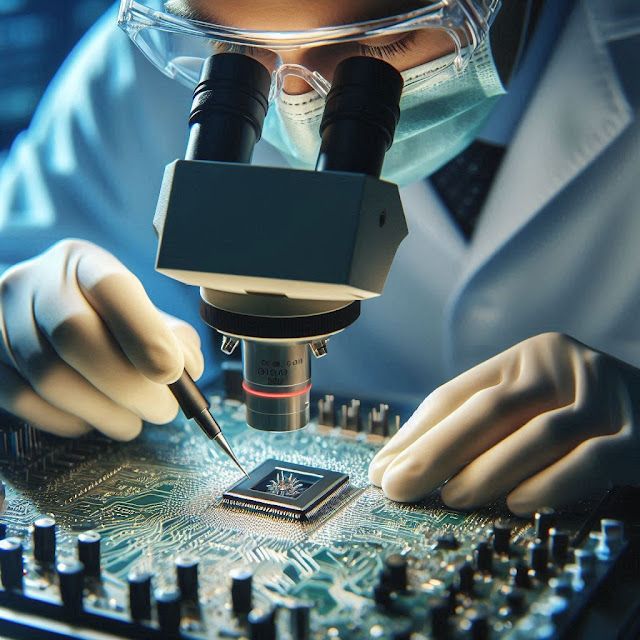
Innovative Micro Technology is shrinking — and that’s a good thing. Over the last decade, engineers and scientists have been building smaller, smarter, and more powerful devices that fit into places we never imagined. This shift is called micro technology, and it is quietly changing how we live, work, and take care of our health.
From sensors thinner than a human hair to chips that can fit on a fingertip, innovative micro technology is proving that big change often comes in small packages. In this article, we will explore what micro technology is, how it works, where it is used, and why it matters for the future.
What Is Micro Technology?
Micro technology refers to the design, development, and production of devices and systems that are extremely small — usually measured in micrometers (one millionth of a meter). These devices are so tiny that they are often invisible to the naked eye, yet they can perform complex tasks like sensing, computing, and communicating.
Micro technology sits between two related fields:
- Nanotechnology – works at an even smaller scale (billionths of a meter)
- Traditional electronics – works at a larger, visible scale
Micro technology fills the gap between these two, making it possible to build small, efficient, and affordable devices that can be used in everyday products.
Why Micro Technology Is So Innovative
Micro technology is not just about making things smaller. It is about making things smarter, faster, and more efficient while using fewer resources. Here is why it stands out as one of the most exciting fields in modern engineering:
- Space-saving design – Tiny components allow manufacturers to build compact devices without sacrificing performance.
- Energy efficiency – Smaller devices often consume less power, which extends battery life.
- Cost reduction – Mass-producing micro components can lower manufacturing costs over time.
- New possibilities – Micro technology enables applications that were impossible with larger devices, such as implantable medical sensors.
Key Areas Where Micro Technology Is Making a Difference
Let’s look at the major fields where innovative micro technology is already changing the game.
1. Healthcare and Medical Devices
Micro technology has transformed modern medicine. Doctors can now use tiny devices to diagnose and treat patients with far less discomfort and risk.
Examples include:
- Micro-sensors that monitor blood sugar levels continuously for diabetic patients
- Implantable chips that track heart activity in real time
- Microneedles that deliver medication painlessly through the skin
- Lab-on-a-chip devices that can run full diagnostic tests using just a drop of blood
These innovations mean faster diagnoses, less invasive treatments, and better patient outcomes.
2. Consumer Electronics
Think about your smartphone, smartwatch, or wireless earbuds. All of these rely heavily on micro technology.
- MEMS (Micro-Electro-Mechanical Systems) power the accelerometers and gyroscopes in your phone that detect movement and orientation.
- Micro-cameras allow devices to capture high-quality images despite their small size.
- Micro-batteries keep wearable devices running for hours without adding bulk.
Without micro technology, today’s compact and powerful gadgets simply wouldn’t exist.
3. Automotive Industry
Modern vehicles are packed with micro sensors that improve safety and performance.
- Tire pressure sensors alert drivers to low pressure instantly
- Micro accelerometers help airbags deploy at the right moment
- Parking and collision sensors use tiny radar and ultrasonic components
These small parts play a big role in keeping drivers and passengers safe.
4. Environmental Monitoring
Micro technology is also helping scientists track and protect the environment.
- Tiny air quality sensors can be placed in cities to monitor pollution levels
- Micro water sensors detect contamination in real time
- Wildlife trackers, small enough to attach to insects or small animals, help researchers study migration and behavior
5. Industrial and Manufacturing Use
Factories use micro technology to improve precision and efficiency.
- Micro sensors detect tiny defects in products during manufacturing
- Micro-robots can perform delicate assembly tasks
- Smart micro-controllers manage machinery with high accuracy
How Micro Technology Works: A Simple Explanation
You don’t need an engineering degree to understand the basics. Here is a simple step-by-step explanation of how most micro devices are made and how they function.
Step 1: Design
Engineers use computer software to design the tiny structure of the device, mapping out every component at a microscopic scale.
Step 2: Material Selection
Common materials include silicon, polymers, and metals that can be shaped precisely at a small scale.
Step 3: Fabrication
Using a process similar to how computer chips are made, layers of material are added or removed to create the micro structure. This is often done using photolithography, a technique that uses light to etch patterns onto a surface.
Step 4: Assembly
The tiny components are assembled, sometimes using robotic arms, since human hands cannot handle parts this small.
Step 5: Testing
Each device is tested for accuracy, durability, and performance before it is used in real-world products.
Popular Types of Micro Technology
| Type | Description | Common Use |
|---|---|---|
| MEMS (Micro-Electro-Mechanical Systems) | Combines tiny mechanical and electronic parts | Smartphones, cars, medical devices |
| Micro-sensors | Detect changes in temperature, pressure, motion, or chemicals | Healthcare, environment, industry |
| Microfluidics | Controls tiny amounts of fluid for testing or delivery | Medical diagnostics, drug delivery |
| Micro-batteries | Small power sources for compact devices | Wearables, hearing aids |
| Micro-robots | Extremely small robotic devices | Surgery, manufacturing |
Benefits of Innovative Micro Technology
Micro technology offers several advantages that make it valuable across industries:
- Improved efficiency – Devices work faster and use less energy
- Better accuracy – Small sensors can detect changes that larger devices might miss
- Portability – Compact size makes devices easy to carry or implant
- Cost savings – Reduced material use can lower production costs
- Wider accessibility – Affordable micro devices can reach more people, including in developing regions
Challenges Facing Micro Technology
Like any growing field, micro technology comes with its own set of challenges.
- Manufacturing complexity – Building devices at such a small scale requires highly specialized equipment
- Durability concerns – Tiny components can be fragile and may wear out faster
- High initial costs – Research and development can be expensive before mass production begins
- Integration issues – Combining micro devices with existing larger systems can be technically difficult
- Data security – Connected micro sensors that collect personal data need strong protection against hacking
Micro Technology vs Nanotechnology: What’s the Difference?
People often confuse micro technology with nanotechnology. While they are related, they are not the same. Here’s a simple comparison:
| Feature | Micro Technology | Nanotechnology |
|---|---|---|
| Scale | Micrometers (millionths of a meter) | Nanometers (billionths of a meter) |
| Visibility | Sometimes visible under a microscope | Requires powerful electron microscopes |
| Common Applications | Sensors, chips, MEMS devices | Drug delivery, materials science, electronics |
| Complexity | Moderate | Extremely high |
| Development Stage | Widely used commercially | Still emerging in many areas |
The Future of Micro Technology
Micro technology is expected to grow rapidly in the coming years. Here are some trends to watch:
- Smart wearables will become even smaller and more powerful, tracking health data with greater accuracy.
- Micro-robots may be used inside the human body to perform surgeries without large incisions.
- Environmental micro sensors will help cities monitor pollution and climate changes more effectively.
- 5G and IoT integration will connect millions of micro devices, creating smarter homes and cities.
- AI-powered micro chips will allow devices to process data locally, making them faster and more secure.
As research continues, we can expect micro technology to become even more integrated into daily life, often working behind the scenes without us even realizing it.
Tips for Businesses Looking to Adopt Micro Technology
If you are a business owner or entrepreneur considering micro technology for your products, keep these tips in mind:
- Start with a clear problem – Identify what issue the micro device will solve
- Partner with experts – Work with engineers who specialize in micro fabrication
- Test thoroughly – Small devices need rigorous testing to ensure reliability
- Plan for scalability – Make sure your design can be mass-produced affordably
- Prioritize data security – If your device collects data, invest in strong encryption and privacy measures
Conclusion
Innovative micro technology is proving that the smallest innovations can create the biggest impact. From healthcare to consumer electronics, environmental monitoring to manufacturing, tiny devices are solving real-world problems in ways that were unimaginable just a few decades ago.
As research and development continue, we can expect micro technology to become even more powerful, affordable, and widespread. Whether it’s a sensor monitoring your health or a chip powering your smartphone, micro technology is shaping a smarter, more connected future — one tiny device at a time.
Frequently Asked Questions (FAQs)
1. What is micro technology used for?
Micro technology is used in healthcare, consumer electronics, automotive systems, environmental monitoring, and industrial manufacturing to create small, efficient, and precise devices.
2. Is micro technology the same as nanotechnology?
No. Micro technology works at the micrometer scale, while nanotechnology works at the even smaller nanometer scale. They are related but distinct fields.
3. What are MEMS devices?
MEMS stands for Micro-Electro-Mechanical Systems. These are tiny devices that combine mechanical and electronic components, commonly found in smartphones, cars, and medical equipment.
4. How is micro technology used in healthcare?
Micro technology is used to create implantable sensors, microneedles for painless drug delivery, and lab-on-a-chip devices for fast diagnostic testing.
5. What are the main challenges of micro technology?
Key challenges include complex manufacturing processes, higher initial development costs, durability concerns, and the need for strong data security in connected devices.
6. Will micro technology continue to grow in the future?
Yes. With advancements in AI, 5G, and the Internet of Things (IoT), micro technology is expected to expand rapidly, especially in wearables, healthcare, and smart city applications.
7. Are micro technology devices expensive?
Initial research and development costs can be high, but mass production often reduces the cost per unit, making many micro devices affordable for everyday use.