
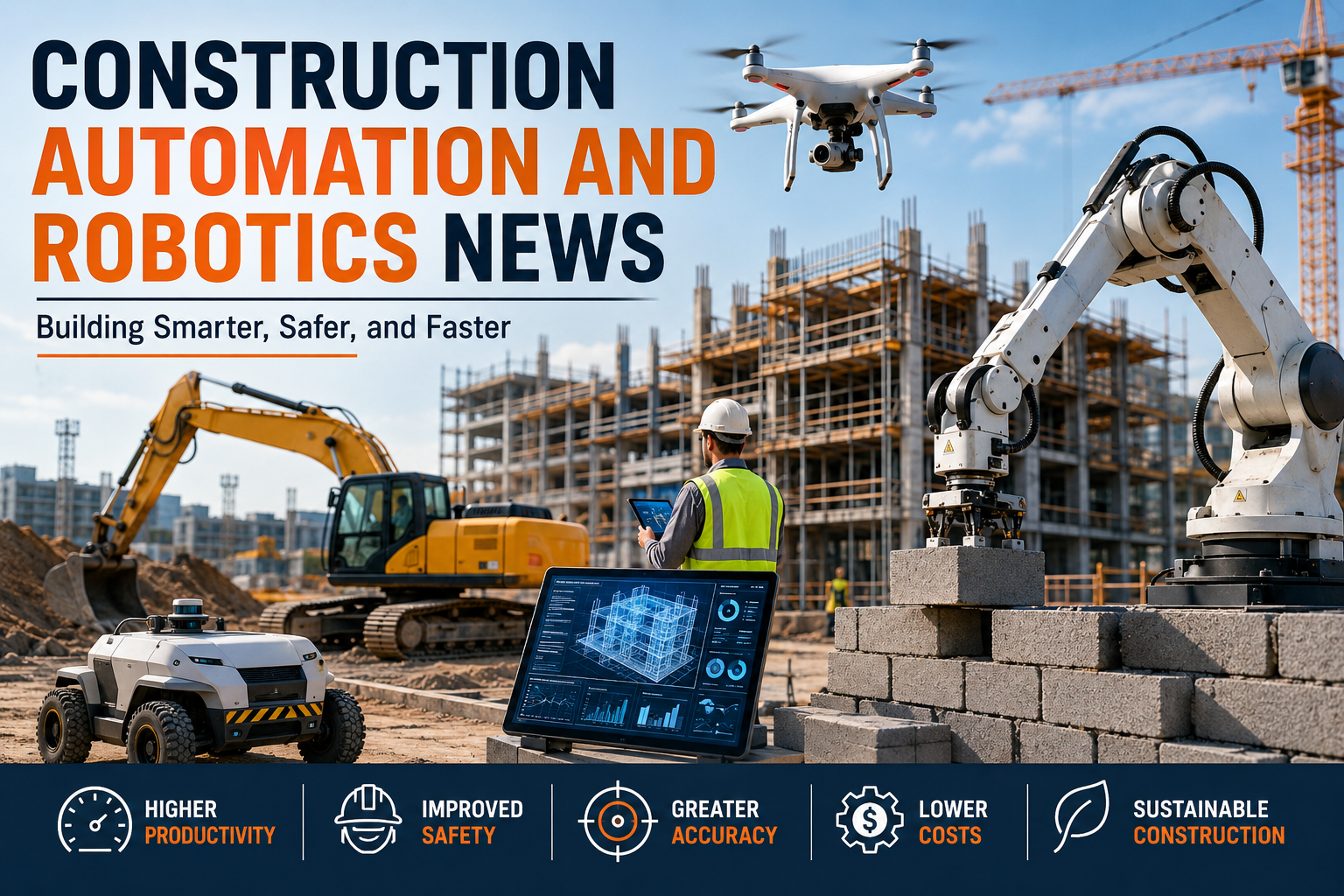
Construction Automation and Robotics News, The construction industry is going through a major transformation. Traditional methods that depended heavily on manual labor are now being upgraded with smart machines, robotics, and automation systems. This shift is not just improving speed but also increasing safety, accuracy, and cost efficiency.
In this article, we will explore the latest developments in Construction Automation and Robotics News, how these technologies work, their benefits, challenges, and what the future holds for the industry.
What Is Construction Automation and Robotics?
Construction automation refers to the use of machines, software, and smart systems to perform construction tasks with minimal human effort. Robotics involves programmable machines that can perform physical construction activities such as bricklaying, welding, demolition, and surveying.
Together, they are changing how buildings, roads, and infrastructure projects are completed.
Key Technologies Used:
- Autonomous construction vehicles
- AI-powered project management systems
- 3D printing in construction
- Robotic arms and bricklaying robots
- Drones for surveying and mapping
Latest Trends in Construction Automation and Robotics News
The global construction industry is rapidly adopting new technologies. Here are some of the most important trends shaping the news today:
1. Self-Operating Construction Machines
Companies are now using autonomous bulldozers, excavators, and loaders that can work without human drivers.
For example, Built Robotics has developed AI-based kits that convert traditional heavy machinery into self-driving equipment.
2. Robotics in Bricklaying and Masonry
Robotic systems can now lay thousands of bricks per day with high accuracy. These robots reduce human error and speed up construction timelines.
3. AI-Powered Project Planning
Artificial intelligence tools are being used to:
- Predict construction delays
- Manage material supply
- Reduce cost overruns
- Improve labor scheduling
4. 3D Printing of Buildings
3D printing is one of the most exciting innovations. Entire houses and structures can now be printed using concrete-based materials in a fraction of traditional time.
5. Drone-Based Site Monitoring
Drones are widely used to:
- Map construction sites
- Track progress
- Inspect hard-to-reach areas
- Improve safety monitoring
How Construction Robotics Works (Step-by-Step Process)
Understanding how automation works in construction helps you see why it is so powerful.
Step 1: Site Mapping and Data Collection
Drones and sensors scan the construction site to create a digital model.
Step 2: AI Planning
AI systems analyze the data and create optimized construction plans.
Step 3: Machine Deployment
Robotic machines are assigned specific tasks such as digging, lifting, or welding.
Step 4: Automated Execution
Machines carry out tasks with minimal human control.
Step 5: Monitoring and Adjustment
Sensors continuously track progress and make real-time adjustments.
Benefits of Construction Automation and Robotics
The adoption of robotics in construction brings many advantages:
1. Faster Project Completion
Machines work longer hours without fatigue, reducing project timelines significantly.
2. Improved Safety
Robots handle dangerous tasks such as working at heights or in unstable environments.
3. Lower Costs
Although initial investment is high, long-term costs decrease due to reduced labor and errors.
4. Higher Precision
Robotics ensures accurate measurements and consistent quality.
5. Reduced Waste
Automation systems optimize material usage, reducing construction waste.
Challenges in Construction Automation
Despite the benefits, there are still some challenges:
- High initial investment costs
- Lack of skilled operators
- Resistance from traditional workers
- Maintenance of advanced machines
- Limited adoption in developing regions
Comparison: Traditional Construction vs Automated Construction
| Feature | Traditional Construction | Automated Construction |
|---|---|---|
| Speed | Slow and labor-dependent | Fast and machine-driven |
| Cost | Higher long-term labor cost | High startup but low long-term cost |
| Safety | Higher risk of accidents | Safer with robotic handling |
| Accuracy | Depends on worker skill | High precision using AI |
| Productivity | Limited working hours | 24/7 operation possible |
Role of Robotics Companies in Construction Innovation
Several global companies are driving innovation in this field:
- Caterpillar Inc. is developing autonomous construction vehicles
- Boston Dynamics is advancing mobile robots for industrial use
- ABB is providing robotic arms for construction automation
These companies are shaping the future of construction through intelligent systems and robotics engineering.
Real-World Applications of Construction Robotics
1. Road Construction
Automated rollers and pavers improve road quality and speed.
2. High-Rise Buildings
Robotic arms assist in welding and structural assembly.
3. Disaster Recovery
Robots are used to clear debris and rebuild damaged infrastructure.
4. Infrastructure Inspection
Drones and sensors inspect bridges, tunnels, and dams.
Future of Construction Automation and Robotics News
The future of construction is expected to be highly automated. Experts predict:
- Fully autonomous construction sites
- AI-managed smart cities
- Robots replacing dangerous manual labor
- Integration of IoT and construction systems
- Increased use of digital twins for project planning
In the next decade, construction sites may look more like advanced tech hubs than traditional work zones.
Steps Companies Can Take to Adopt Automation
If a construction business wants to adopt robotics, here are simple steps:
Step 1: Start with Digital Tools
Begin using software for planning and project management.
Step 2: Invest in Training
Train staff to operate automated systems and robotics tools.
Step 3: Use Small Automation Tools First
Start with drones or simple AI software before large machines.
Step 4: Partner with Tech Companies
Collaborate with robotics firms for integration support.
Step 5: Scale Gradually
Expand automation step by step based on project needs.
Frequently Asked Questions (FAQs)
1. What is construction automation?
Construction automation is the use of machines and AI systems to complete construction tasks with minimal human involvement.
2. How is robotics used in construction?
Robots are used for bricklaying, welding, excavation, site inspection, and material handling.
3. Is construction automation expensive?
Initial costs are high, but long-term savings in labor and time make it cost-effective.
4. Will robots replace construction workers?
Robots will not fully replace workers but will change job roles and reduce dangerous manual tasks.
5. What is the future of construction robotics?
The future includes fully automated sites, AI-driven planning, and smart infrastructure development.
Conclusion
The rise of Construction Automation and Robotics News highlights a major shift in how the global construction industry operates. From AI-driven planning to robotic machinery and autonomous vehicles, the sector is becoming faster, safer, and more efficient.
Although challenges like high costs and skill gaps still exist, the long-term benefits are undeniable. As technology continues to evolve, construction will become one of the most advanced and automated industries in the world.
The future is clear: smarter machines, safer sites, and more efficient buildings powered by robotics and automation.